Sunday, March 10, 2024

Unto the Convincing of the World that Jesus is the Christ


Now I, Nephi, do speak somewhat concerning the words which I have written, which have been spoken by the mouth of Isaiah. For behold, Isaiah spoke many things which were hard for many of my people to understand; for they know not concerning the manner of prophesying among the Jews. [My people,] give ear unto my words; for because the words of Isaiah are not plain unto you, nevertheless, they are plain to all those that are filled with the spirit of prophecy. (2 Nephi 25: 1, 4)


Reading Isaiah with a Spirit of Prophecy

Nephi clarified much of Isaiah’s writings for his people because he knew they were often difficult to understand. Nephi had lived near Jerusalem and, thus, he did have an understanding of ancient Jewish language, writing, and prophecy. Like many prophecies of great report, an understanding of Isaiah cannot be achieved through intellectual means. However, Approaching Isaiah with a spirit of prophecy does not require one to be a prophet; it requires prayerfully reading to understand through the spirit of the Holy Ghost. Elder Dieter F. Uchtdorf stated in General Conference that a testimony of Jesus Christ is the spirit of prophecy. [1] If we have such a testimony, the scriptures will be much clearer to us as the Holy Spirit testifies to the spirit within each of us. It is a spiritual gift worth seeking.


[1] Testimony of Jesus Is the Spirit of Prophecy (churchofjesuschrist.org)


Who would you say is the main figure in the Book of Mormon? While some might suggest Nephi, Alma, or Mormon, the real main figure is Jesus Christ. Nephi wrote:

“We labor diligently to write, to persuade our children … to believe in Christ. …

“And we talk of Christ, we rejoice in Christ, we preach of Christ, we prophesy of Christ” (2 Nephi 25:23, 26).

In 1978, Susan Ward Easton published a landmark article, numerically demonstrating that Jesus Christ is the main figure in the Book of Mormon. She identified the different titles of Jesus Christ and showed that He was mentioned by name or title 3,925 times in the Book of Mormon, which averages out to be once every 1.7 verses.1

1]See Susan Ward Easton, “Names of Christ in the Book of Mormon,” Ensign, July 1978, 60–61.


Saturday, March 9, 2024

The Whole Earth is at Rest and is Quiet: The Gathering to Prepare for the Millennial Reign of Jesus Christ


The Lord will have mercy on Jacob, and will yet choose Israel, and set them in their own land; and the strangers shall be joined with them, and they shall cleave to the house of Jacob.

And the people shall take them and bring them to their place; yea, from far unto the ends of the earth; and they shall return to their lands of promise … The whole earth is at rest and is quiet; they break forth into singing. … (2 Nephi 24: 1-2)


The Lord Will Yet Choose Israel: The Gathering

This section is one of many millennial prophecies of Isaiah.  Prior to the Second Coming of Jesus Christ and the ushering in of the millennium, several things must occur.  One of these signs is the coming forth of the Book of Mormon and the Restoration of Christ’s Church. Another is the return of Judah to her homeland.  Yet another is the gathering of scattered Israel to the gospel.

In 1841, Elder Orson Hyde stood on the Mount of Olives and dedicated the land for the return of the Jews.[1] It took more than a hundred years for the nation we know today as Israel to be declared to the world. 


The gathering of all scattered Israel to the Gospel of Jesus Christ is current and on-going. Strangers shall be joined with Israel and shall enter into the covenant with God the whole earth is being blessed by the descendants of Abraham through Jacob. In 2017, the American president formally recognized Jerusalem as the capital of Israel.[2] Each prophet of the Church of Jesus Christ of Latter-day Saints has held the keys to the gathering of Israel.[3] Scattered Israel is being gathered first spiritually; the physical gathering of Israel will not be completed until Jesus Christ comes again and ushers in the millennium. It is then that Isaiah’s prophecy will be fulfilled, that the earth shall be quiet and at rest and its people shall break forth in singing.


Before sunrise on Sunday, Oct. 24, 1841, Elder Orson Hyde of the Quorum of the Twelve Apostles exited the city walls of Jerusalem, crossed the brook Cedron and climbed the Mount of Olives. 

With pen and paper, and in solemn silence, he offered a prayer dedicating the Holy Land “for the gathering together of Judah’s scattered remnants” and as a land of promise for all the scattered children of Abraham.

“Now, O Lord! Thy servant has been obedient to the heavenly vision which Thou gavest him in his native land,” Elder Hyde prayed, “and under the shadow of Thine outstretched arm, he has safely arrived in this place to dedicate and consecrate this land unto Thee, for the gathering together of Judah’s scattered remnants, according to the predictions of the holy prophets. …

“Let that nation or that people who shall take an active part in behalf of Abraham’s children, and in the raising up of Jerusalem, find favor in Thy sight.”

If you look at any modern Encyclopedia, you will read that the Zionist movement was begun by a Jew named Theodor Herzl due to the release of his landmark pamphlet Der Judenstaat in 1896.  This is what the world at large believes to be true.

Not wishing to take away any recognition of Mr. Herzl, whose contributions to the gathering of the Jews was enormous, but as a Latter-day Saint, I believe that this movement - the Biblical promised gathering - began on a hillside in Jerusalem forty-four years earlier.

Strictly speaking, it began even before that when, on April 3, 1836, the Lord sent the great prophet Moses to appear to Joseph Smith and Oliver Cowdery in the Kirtland Temple, to restore the priesthood keys to the gathering of Israel.

Isaiah was right: the Lord has always had mercy on Jacob. He always had plans in place to restore the Jews and the rest of Israel to their rightful places in the kingdom and to their promised ancestral homes. The Lord uses men to fulfil his purposes, men like Joseph Smith, Orson Hyde, Theodore Herzl, and even Donald Trump, who in 2017 recognized Jerusalem as the capital of Israel.

Friday, March 8, 2024


The burden of Babylon, which Isaiah … did see.

Lift ye up a banner upon the high mountainexalt the voice unto them…

And I will punish the world for evil, and the wicked for their iniquity; I will cause the arrogancy of the proud to cease… (2 Nephi 13: 1, 2, 11)[1]


The Burden of Babylon: the Proud

The question is sometimes asked: why does the Lord use such evil nations as Assyria and Babylon to punish His people? Do they get off scot-free? The answer is that, no, they do not get away with anything.  Assyria and Babylon were both destroyed and, whereas Israel has been promised a return, Assyria and Babylon have not. These wicked nations may have been far more evil than the Children of Israel, but Israel had been chosen to be a royal priesthood. When they fell, their fall was hard.  Where much is given, much is expected. By the choices Israel and Judah made, they negated in some ways the covenant they had with God. They had been promised protection and prosperity if they would serve the God with whom the covenant was made; when they did not, God withdrew His protection.  He did not have to punish them.  They punished themselves. With the hedges of God’s protection gone, they were easy prey to proud and ambitious nations. Those nations, in their turn, also fell.


One of the themes of the Book of Mormon is America’s Covenant with God. We are told throughout the text that this land is choice above all other lands and will be protected so long as the inhabitants serve the God of this land, which is Jesus Christ. Two nations in the history of the world have been founded on divine covenant: ancient Israel and the United States of America.  Israel fell, but for us the covenant is still in effect.  As a nation, how are we doing?


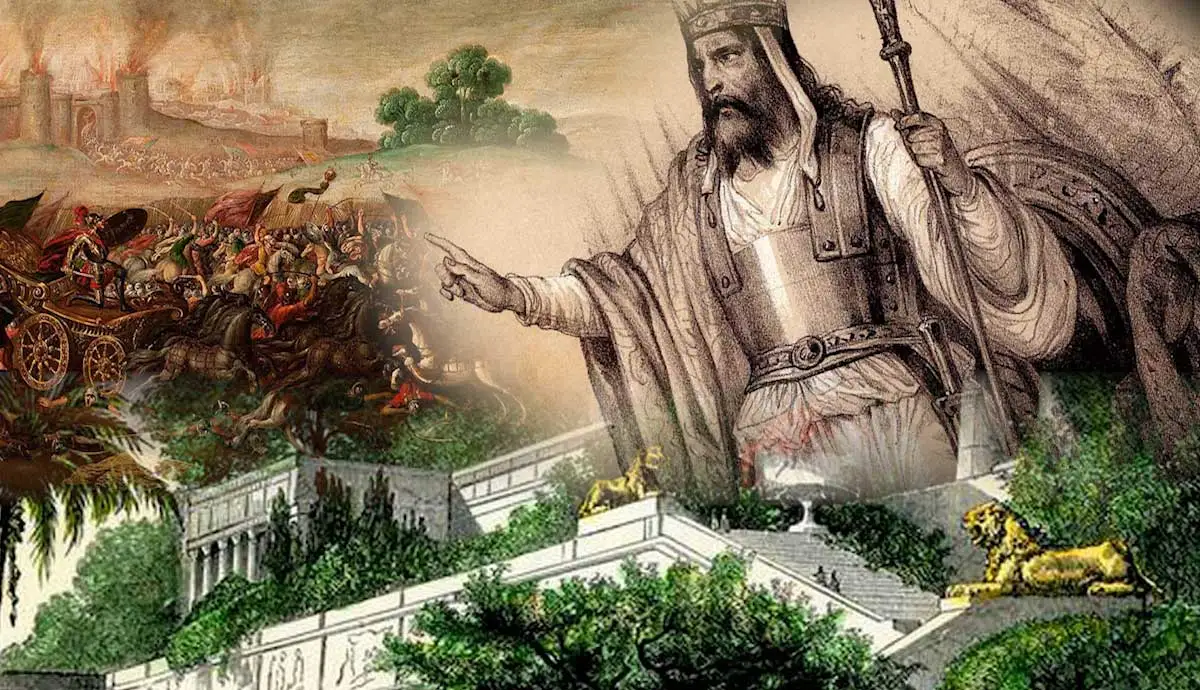
One of the names connected to Babylon was that of its king, Nebuchadnezzar. We sometimes forget that the Lord knew this man and had blessed him.  God sent important revelations for the future of the world to this king in dreams.  The best known of these was his dream of the huge statue made of precious metals from gold to silver to bronze and eventually to clay.  Following Daniel's interpretation of the dream, Nebuchadnezzar praised the God of Daniel.

But that didn't last for long.  Like many great men with absolute power, his own power corrupted him.  The Lord gave him yet another dream in which a tree grew strong and mighty only to be chained down and cut off.  Daniel was able to interpret for the king that he, in fact, was the tree.  God had warned the king that in his arrogance, pitting himself against the God of Heaven, he would be cut off and would live as an animal, eating grass.

At the end of twelve months he walked in the palace of the kingdom of Babylon.

The king spoke, and said, Is not this great Babylon, that I have built for the house of the kingdom by the might of my power, and for the honor of my majesty?

While the word was in the king’s mouth, there fell a voice from heaven, saying, O king Nebuchadnezzar, to thee it is spoken; The kingdom is departed from thee. (Daniel 4: 29-31)


The king descended into madness (lycanthropy is the hypothesis of modern scholars) and did live like a beast for 7 long years. It wasn't until he was sufficiently humbled that he called upon the God of Daniel and blessed His name and worshipped Him that he was healed from his madness and again regained his crown.

God is the God of all people, whether the acknowledge Him or not. In what ways do we try to put ourselves ahead of God? What role does pride play in that arrogance?

[1] See Isaiah 13; the head note for these chapters state that the woes in these verses are a type of the woes coming before Christ comes again.

Monday, March 4, 2024

Sing Unto the Lord


Behold, God is my salvation; I will trust, and not be afraid; for the Lord is my strength and my song; he also has become my salvation. Therefore, with joy shall ye draw water out of the wells of salvation. And in that day shall ye say: Praise the Lord, call upon his name, declare his doings among the people, make mention that his name is exalted. Sing unto the Lord; (2 Nephi 22: 2-4)


Sing Unto the Lord

In this dispensation, the Lord has repeated the importance of music to the Lord when He said to Emma Smith, For my soul delights in the song of the heart; yea a song of the righteous is a prayer unto me… Wherefore, lift up your heart and rejoice. (Doctrine and Covenants 25: 12-13) The Lord also said, cleave unto the covenants which you have made. Music should help us so cleave.


In any study of the Old Testament, you will find frequent references to song.  In fact, the Book of Psalms is almost entirely a book of songs. Music has a way of reaching the Spirit that mere words alone sometimes miss. My father had a close friend who had a remarkable singing voice and who also knew the power of good music.  He was called to the bedside of a man who was dying.  This good brother had slipped into a coma and hadn’t recognized his family, nor said a single word for many days.  Michael[1] sat at his bedside and began to sing some of the man’s favorite hymns.  Much to the surprise of his family, the man opened his eyes and began to smile. Such is the power of music. Several years ago, this same Michael recorded a talk he had given on the topic of music.  Just as we must take care what food we put into our bodies to stay healthy, he said, we must also take care what we put into our minds, including the music we choose. Discordant and raucous music is actually damaging to the human brain.  We should remember that, as a prayer, a song should uplift and draw one closer to the Lord, not away from Him.

Equity for the Meek of the Earth


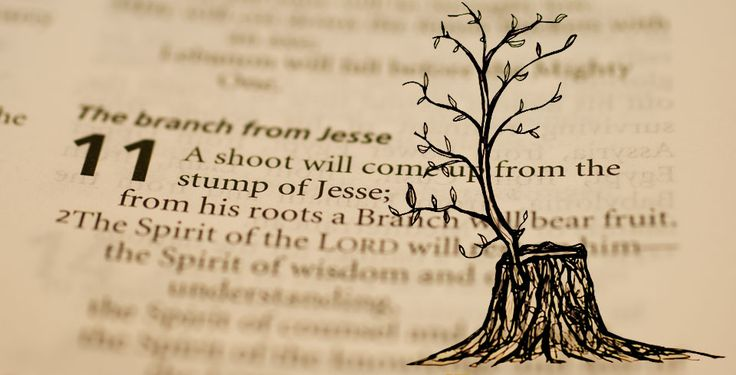
There shall come forth a rod out of the stem of Jesse[1], and a branch shall grow out of his roots.

And the Spirit of the Lord shall rest upon him, the spirit of wisdom and understanding, the spirit of counsel and might, the spirit of knowledge and of the fear of the Lord; and he shall not judge after the sight of his eyes, neither reprove after the hearing of his ears. But with righteousness shall he judge the poor, and reprove with equity for the meek of the earth;

(2 Nephi 21: 1-4)[2]


Equity for the Meek of the Earth

This is yet another example of a Messianic verse from the Prophet Isaiah. It refers to Jesus Christ, a literal descendant of King David. During His lifetime, he did minster among the poor and meek of the earth. He healed and fed and taught those who answered His call to follow Him. He was and is the antithesis of the selfishness of which Isaiah spoke in chapter ten. We can get closer to Heaven by following His example than through any other way. He was criticized by many in His day for spending time with the poor, needy and even sinful of the earth.  He taught, They that are whole have no need of a physician, but they that are sick. (Matthew 9: 12) The irony of this statement is that all of us are sick! As King Benjamin would later say, Are we not all beggars? (Mosiah 4: 19) The answer is, of course, we all are. To put it in the vernacular, we all live in glass houses and, as such, have no business throwing stones.


Only the Lord knows men’s hearts.  Who are we to judge another when we, ourselves, walk imperfectly?[3] In the words of the hymn, In the quiet heart is hidden, sorrow that they eye can’t see. Let us follow His example in our response to others, learning to love our neighbor as He loves us.


[1] King David’s father

[2] Isaiah 11

[3] Lord, I Would Follow Thee, hymn 220, LDS hymnal

Saturday, March 2, 2024

The Bricks Have Fallen Down

Wo unto them that decree unrighteous decrees, and that write grievousness which they have prescribed; To turn away the needy from judgment, and to take away the right from the poor of my people, that widows may be their prey, and that they rob the fatherless.  The bricks are fallen down, but we will build with hewn stones; the sycamores are cut down, but we will change them into cedars. (2 Nephi 19: 10)[1]

Ruins in Samaria - the Assyrian Attack

After 9-11-2001, this verse from Isaiah was quoted by several sources, including a senator and vice-presidential candidate.  It was used to express America’s resiliency and resolve in the face of what amounted to an attack on American soil. However, if everyone who quoted Isaiah that week had read the verse in context, they would have seen that this was not something to celebrate; the verse was not about resilience but arrogance in Israel. Just one verse earlier, Isaiah stated: All the people shall know … who say in the pride and stoutness of their heart . . .                                                                                                                                                    (2 Nephi 19: 9, 11)


9-11

Someone once said that you can prove or disprove most things by the Bible. While I do not agree with that statement, it does underscore the tendency of people to take one or two verses out of context and form opinions based only on that. Nephi taught that we must feast on the words of Christ. (2 Nephi 32: 3) Note that he did not say snack or nibble, but feast. 


Primary children sing a song that sums it up well: Search, Ponder, and Pray.[3]

            I love to read the holy scriptures, And every time I do,

            I feel the Spirit start to grow within my heart – A testimony that’s true.

            Search, ponder, and pray, Are the things that I must do.

            The Spirit will guide and deep inside, I’ll know the scriptures are true.


Challenge: search, ponder, and pray about the scriptures in their original context.  You will be amazed at the things the Spirit can teach. 


[1] See Isaiah 9: 10

[2] The Northern Kingdom of Israel was indeed overrun and destroyed by Assyria not too many years later.

[3] Children’s Songbook, hymn 109; Jaclyn Thomas Milne and Carol Baker Black

Friday, March 1, 2024

Should Not a People Seek Unto God?

And when they shall say unto you: Seek unto them that have familiar spirits, and unto wizards that peep and mutter—should not a people seek unto their God for the living to hear from the dead?  (2 Nephi 18: 19)


Seek Unto God

One of the many sins afflicting the Children of Israel was their propensity to seek for answers in all the wrong places.  The phrase familiar spirits alludes to witchcraft and sorcery.  After the Prophet Samuel died, King Saul consulted such a person.  She was known in the Bible as the witch of Endor.[1] Saul requested that she bring back the Prophet Samuel from the dead so he could advise the king. I don’t know if necromancy was a common occurrence in Israel, but it must have been common enough for Isaiah to warn against it. Instead of soothsayers or seances, Isaiah teaches, God’s people should turn to Him for their answers.


In our world today, there is an alarming trend of people using, for lack of a better word, magic, and the occult to understand what is going on the in world.  That is the last place faithful Christians should go for answers! Seemingly harmless things like Ouija boards and tarot cards invite spirits into our homes that should never be welcomed there.


Answers to questions about life and the world around us come from the scriptures, latter-day apostles, and prophets, and from answers to sincere prayer through the Holy Spirit. Moroni taught us that through the Holy Ghost, we can know the truth in all things.  He goes on to say lay hold on every good gift, and touch not the evil gift nor the unclean thing. (Moroni 10: 5, 30) The world may ask different of us, but if we are wise, we will heed the words of Isaiah and Moroni and avoid anything which comes from a questionable source – any source that is not of God.


[1] See 1 Samuel 28 


The Wrong Places to Look: The World


 The Right Places to Look: God

Sources of God's words:
  •  Scriptures
  • Words of Latter-day Prophets and Apostles
  • Home and Family
  • Prayer and the Holy   Ghost